I’ve got a Roll for Growth group that’ve only recently come together. We play Dungeons & Dragons, and the participants play as characters they’ve created; adventurers who have come into ownership of a pirate’s ship, and are seeking to foil an evil plan involving zombies, a villainous baron, and magic-users unknown.
In a recent session, we hardly did any of that. Dice were rolled, and an epic sea battle was won, but the adventure was put on hold in favour of something else. Something way cooler than a longship full of ogre pirates.
A group of neurodivergent teenagers sharing their stories, struggles and experiences at school, the things that frustrate them and how they help manage it. For many young people, school has a considerable variety of stressors; neurotypical standards and expectations, tests, assignments and of course, NAPLAN. But it was awesome to sit at a table and listen to this rad group of young people share strategies and advice on how to deal with stress – with some ideas and guidance from yours truly.
And I’m sitting there listening to this group support each other and chat ideas, and that’s the goal. Help bring young folks together, learn about themselves, help each other and hopefully, make a group of friends.
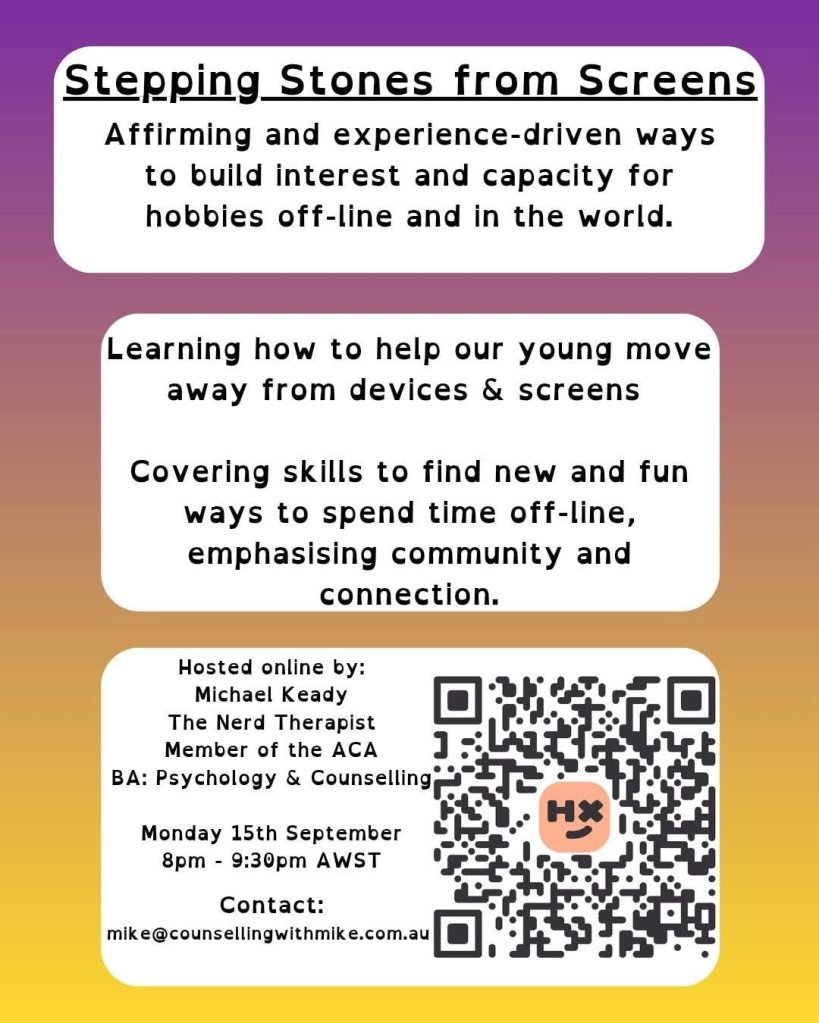
Stepping Stones from Screens, a workshop on the needs filled by gaming and devices, and how we as caregivers can help explore life and hobbies off-line.
This webinar does not come from a place of shame. I’m a gamer and a parent, what I want for this workshop is for it to unpack how gaming can be beneficial, and how we can use it as a springboard to explore hobbies, activities and interests.
I’ll be drawing on personal and therapeutic experiences, including my own personal journey of moving away from being a 10+ hour a day gamer myself – and happier for it. I still regularly game, and do mindfully and as a choice.
Hi folks, I’m putting together a blog post to update you on this evolving event as it may become known to your young people. I’m going to attempt to remain objective in this so as to not be alarmist, so it may not have my usual word usage or tone.
Please be aware that this post will contain references to child predators and online grooming.
Roblox is an online platform and app that can be used to create games and share them with friends and the online community at large. Some Roblox games are very well known and have definitive brands separate to Roblox; “Doors”, “Piggy”, “Grow a Garden”.
A Roblox player and YouTuber named Schlep, who was groomed on Roblox as a child, started a YouTube account where he posed as a child, lured child predators to a real-world meeting and then confront them with police officers. This has so far resulted in six arrests. Some of these videos have millions of views, and Schlep himself has a million subscribers.
Roblox has sent Schlep a cease-and-desist letter and banned his accounts online. Chris Hansen had reached out to discuss and collaborate with Schlep on the topic of Roblox’ handling of child safety. Chris Hansen is most known for “To Catch a Predator”, a 2004 television documentary series that revolved around sting operations to capture online child predators.
The state of Louisiana have filed a lawsuit accusing Roblox of failing in its duty of care and attempting to silence people holding them accountable. Roblox are claiming to be collaborative with health, legal and child protection services.
There have been posts in Roblox spaces conjecturing that Roblox is going to be banned, and Youtubers will likely be making videos with this as a click-bait title as the Schlep case unfolds. Roblox are announcing that they do not believe the charges as listed and are contesting this. It is too early in the legal process to determine whether Roblox will be removed as a result of this.
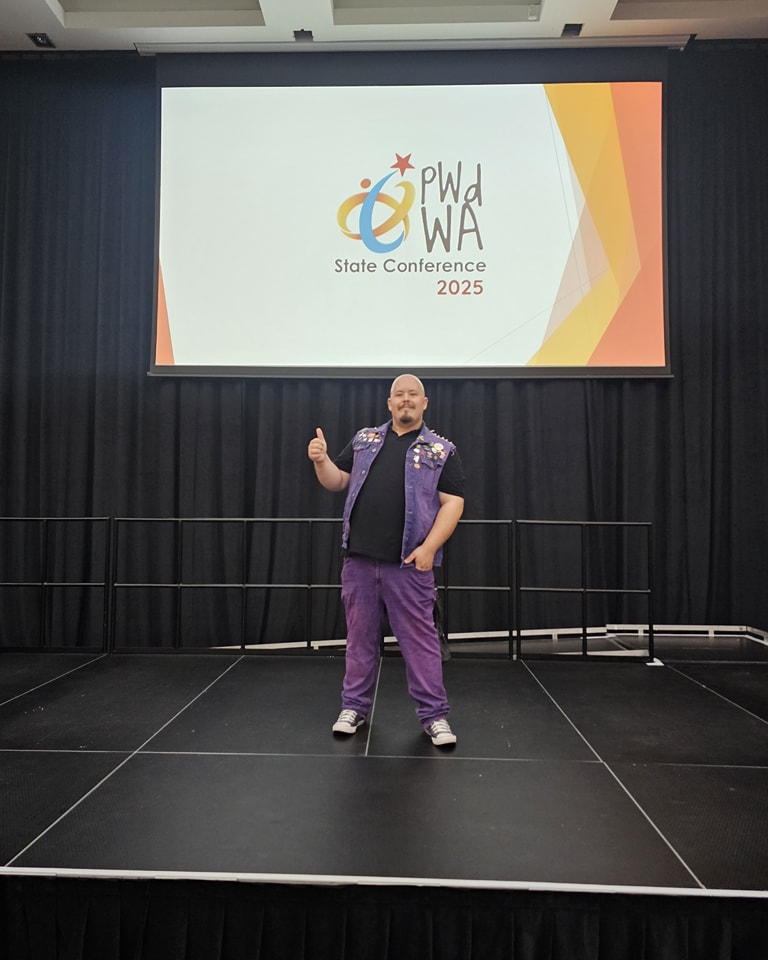
Last week I had the incredible privilege to be the master of ceremonies at the People With Disabilities: Western Australia State Conference for 2025. It was epic!
I loved the experience, loved being around the community, it was empowering and affirming, engaging and invigorating. It was an amazing experience for my professional life.
And I want to do it more.
If you need a speaker or emcee – please consider me!
I’ve got some relevant experiences – and I’m pursuing representation! But for now, if you’d like to contact me about some speaking or emcee roles, I’ve got some bonuses for you!
I’ve got; *experience in VIP hospitality experiences *events management skills across a variety of industries *regular engagement with public speaking and crowd work
who can *provide inclusion consultation *serve professionalism and authenticity *work with you to ensure that your guests are respected and treated the way you’d hope *advertise your event across social media
The following is an excerpt from my book in progress; The Voices of Radicalisation – The Influencers Profiting From Harming Our Youth.
You’ll find throughout this book I do not make reference to the term “toxic masculinity” – and I can guarantee I’ll probably have mentally used it while writing this. I’ve put some time and effort into replacing the term in a public space such as this book or some of the Tiktoks I’ve made on the topic. No doubt I’ll have to do a special re-read during the editing process to make sure that the term hasn’t been used, because it can be easy to use, and it’s a reliable descriptor for dangerous traits that are attributed to masculinity.
There is a reason that I am moving away from saying or writing ‘toxic masculinity’ – it’s become a weaponised phrase. Not by people criticising misogyny but by the people who perpetuate it. It has become what is referred to as a ‘thought-terminating cliche’, a phrase that allows someone to disconnect their critical thinking from a situation.
Simply mentioning “toxic masculinity” on my Facebook page will elicit a response from dozens of men to varying degrees of aggression, with very simple and predictable responses
Accusations of damaging men’s mental health Suggesting that I’m attacking masculinity Saying that I’m “siding with the enemy”
The men who profit from violent misogyny culture, whether it’s financially or through the influence they enjoy, have convinced their followers that this phrase is an offensive attack on the very core of their identity. One thing we’ll explore later in this book is that a lot of these ideologies stem from men’s feelings of insecurity in their masculinity or manliness. So when you use the phrase “toxic masculinity”, they hear it as an attack on their manliness, and react to an ego-threat.
So I avoid its use. Because we can’t have these conversations with men if they’re in the grips of an insecurity-driven panic, because they’re reactive, angry and threatened. Saying or posting about ‘toxic masculinity’ may close a door that we want to keep open – may shut down a conversation that is necessary to have to maintain relationships or support the mental health of someone who is under the influence of violent misogyny culture.
So what is it?
‘Toxic masculinity’ refers to behaviours and thoughts that centre ideals of male supremacy – especially patterns of invalidation, coercion, control and abuse, that are often portrayed as essential or traditional traits of masculinity and masculine men, despite the harm that these behaviours bring to families, the community, and even men themselves.
In some spaces and in feminist theory this would be called patriarchy – the idea that masculine men should be leaders due to inborn traits that render them superior to women and non-masculine men, and that women should be excluded from power an influence.
So what do I use instead?
In this book I’m going to refer to it as ‘violent misogyny’ culture – identifying that the sexism and misogyny at play here leads to the normalisation of coercion, dehumanisation and violence. What we’re trying to avoid is using language that would be labelled as ‘woke’ – another thought-terminating cliche that would bring a swift and abrupt end to the conversation.
I also use the phrase ‘male supremacy’ – deliberately evoking the language around other hate movements such as white supremacy. however I tend towards the use of the phrase ‘violent misogyny’ as I feel it is more accurate.
But how would I address it with someone in the moment?
A problem with online discourse and the propaganda of male supremacy influencers is that it seeks to create emotional reactions to valid criticisms. Toxic masculinity, patriarchal harm, these are great terms for use in discussion and academia – however part of beginning work with people who’ve fallen for this propaganda is meeting them where they are. We cannot begin to work with them if they’re in a place where they hear this language and feel as though their sense of self is being attacked. We can work towards it – but in early stages of the process of recovery and reconnection, it is worthwhile to use a tactic that doesn’t close doors, especially if the people we’re working with are our kids, or other young men in our life.
There’s been some recent discourse, at least recent as of May 2025, around using phrases like ‘dishonour’, appealing to romanticised codes of ethics – knightly chivalry, the samurai code of bushido, or other creeds in martial arts. These creeds often contain idealised or spiritual values that appeal to these young men, and we can begin here to explore language and strategies to approach these topics.
To start with – chivalry doesn’t have a whole lot of historical context behind it, and it was mostly for the uses of poetry and fanciful stories about knights in shining armour, but it may be a place to start. Some versions of chivalry suggest that it is virtuous to apply our strengths to making the world better for everyone around us.
Muay Thai boxers swear an oath to live with honesty and integrity. Courtesy, integrity and self-control appear in Taekwondo. Various karate schools espouse a code of ethics that includes living harmoniously and working collaboratively with others, and to act in fairness in all things.
Part of the challenges some young men face is feelings of disconnection from a meaningful life, and the world around them. We’ll cover more ahout this later, but for the meantime we can use values-driven language to explore violent misogyny without using language that elicits the programmed reaction.
Part of that disconnection is the starting point and an intentional byproduct of a phenomena referred to as The Pipeline.
A few weeks ago I started seeing a slew of commentary about this show Adolescence; crime, murder, and new trending content is usually not what I look into but when I saw that this was tackling incels and the idea of gendered violence I thought I’d give it a watch.
It was a really well-acted and cleverly made show – but I was mostly interested in how it called attention to the influencers polluting the minds and corroding the self-worth of young men, turning them towards feelings of hopelessness, and violence.
What I saw in discussions, professionals and parents groups was really surprising to me; that this was news to many people.
I’ve spent, and continue to spend, a lot of time online. I used to moderate a psychology special interest community online – a pretty large one, and we were frequently raided and harassed by incel and redpill groups, often after banning members of these groups for their often transphobic and homophobic, and always misogynistic ideals.
So I had to learn a lot about them, first to identify the threat they posed to the communities I was part of, and now as a therapist, continuing to apply those psychology models to learn about how we can recognise the beginnings of radicalisation by these hate groups.
As someone with younger brothers, and kids of my own, as a professional in the field, I’ve worked towards building an understanding of the voices and influences that seek to profit from mental harm and social disconnection.
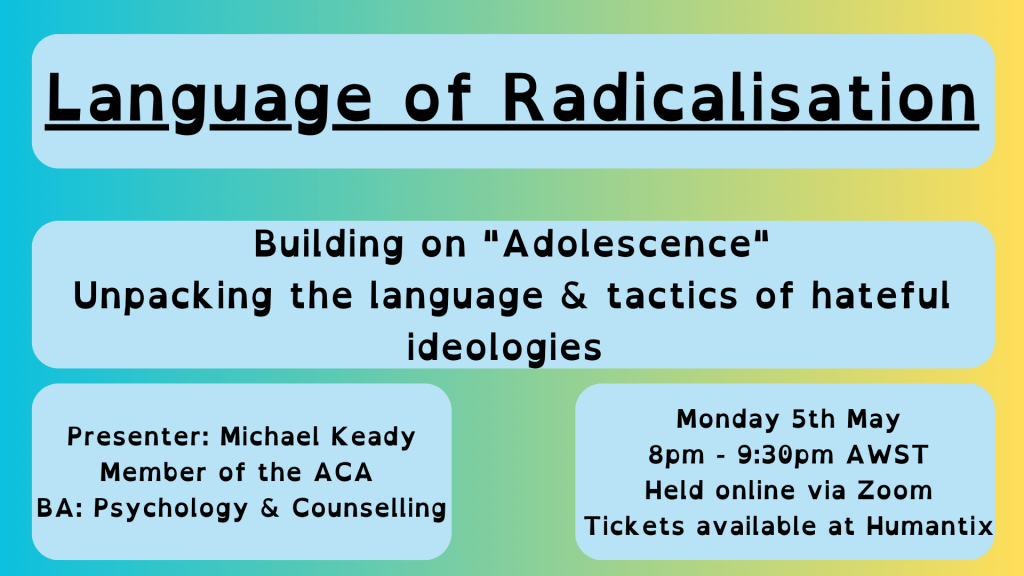
I’m going to be presenting my findings from my psychology studies, my own investigations into these subcultures, and some of the ways parents and professionals can recognise the influence of these subcultures, and how to support those at risk of coercion by them.
I’m looking forward to presenting Language of Radicalisation on the 5th of May! You can sign up at the link below!
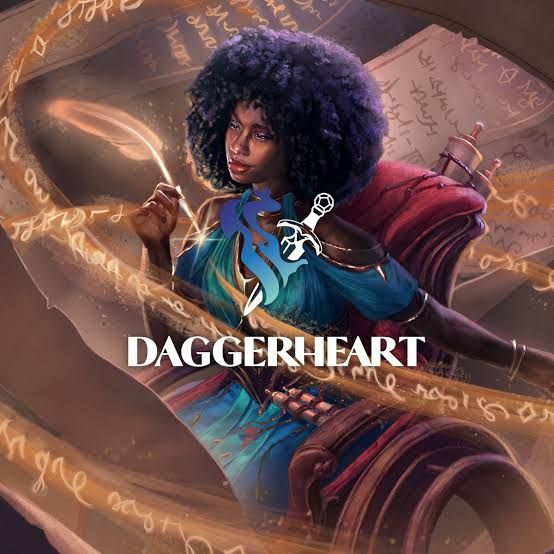
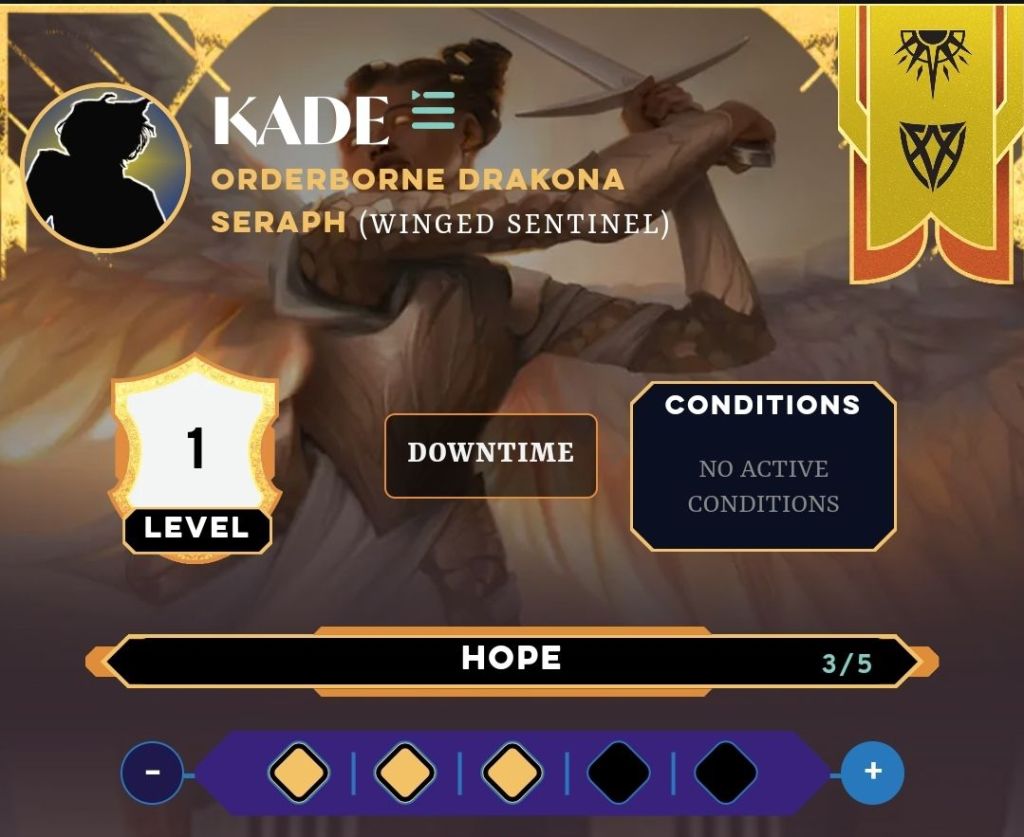
I got to run Daggerheart – the new TTRPG from Darrington Press – in a therapeutic TTRPG group tonight!
The game’s focus on narrative and the duality dice keep the game dynamic and and highlights diverse outcomes from situations, while having character creation streamlined but providing opportunities to create a character that feels like part of a group and a larger world! This is rad as it gives players more agency over their background and provides Storytellers with a cast of characters beyond the players.
It’s got enough of the fantasy rpg worldbuilding that we’re used to from D&D and Pathfinder but with the approach to storytelling that many of my D&D groups prefer over the war gaming elements inherited from D&D’s past.
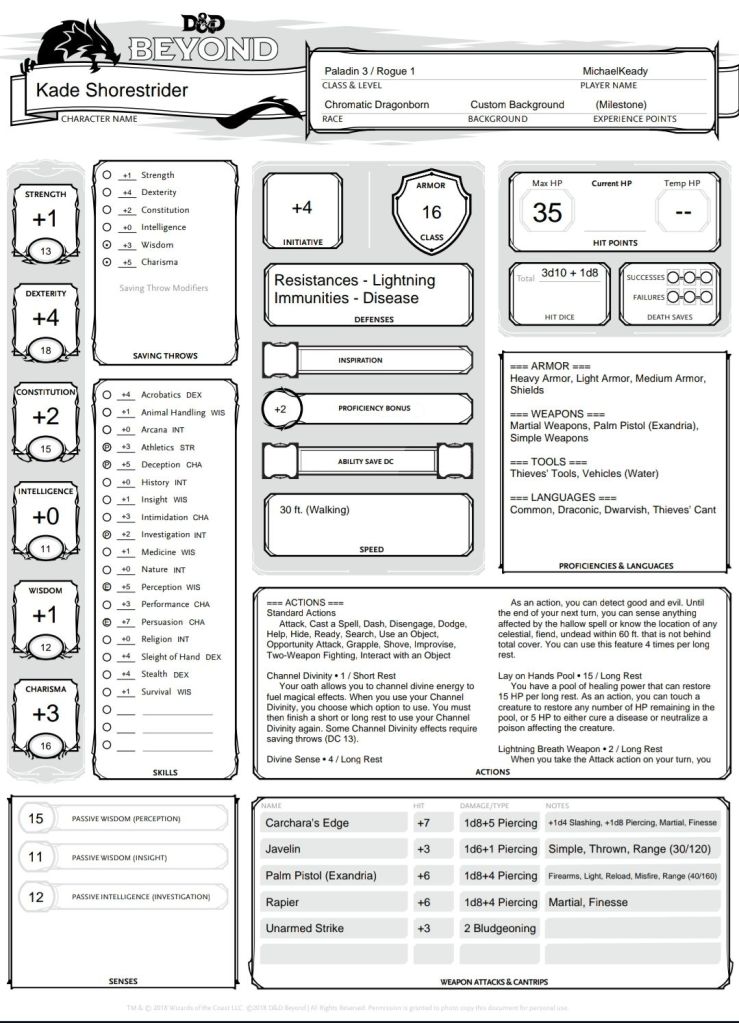
Pictured is Kade, my Drakona Seraph, sworn to ensure magic is wielded responsibly. Each trait is a simple modifier that also describes their common uses.
Character creation was a breeze and reminded me of Cyberpunk RED’s Lifepath system, and PBTA elements to tie the party together. Running the game was gripping, with the duality dice providing tension and anticipation to each roll!
I’m adding this to the shelf for my Roll for Growth – Therapeutic Storytelling Games program! It’s a natural fit for the focus the groups I run have on the interpersonal stories!
I found it to be intuitive and fun, I can’t wait to return to it with more groups!
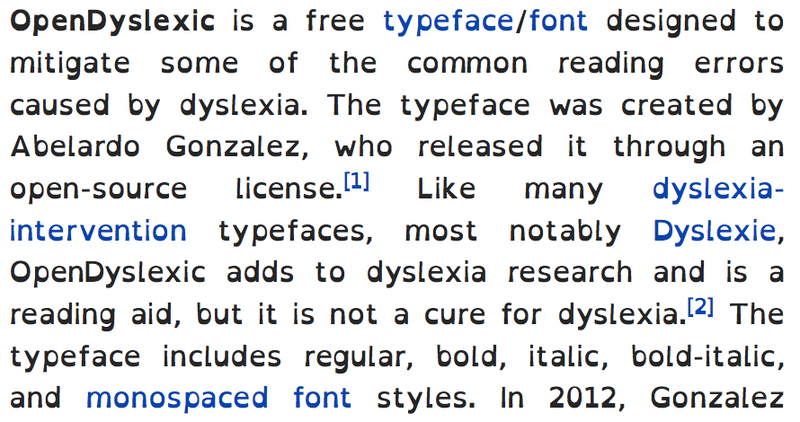
Hey there! You might’ve noticed that I use a different kind of font to many other fonts used online. I use a dyslexia-friendly fonts, listed as Open Dyslexic. Why?
First off, dyslexia is something that affects how people read and process words. It’s a facet of neurodivergence that makes traditional fonts a bit of a headache to read. So, imagine trying to reach out for help when the very words you’re reading are causing you stress. My practice is driven by creating spaces to be accessible – and so my advertisements are designed to be.
That’s where dyslexia-friendly fonts come in. They’re designed with readability in mind, making it easier for folks with dyslexia to navigate through text without feeling like they’re decoding a secret message.
But it’s not just about making things easier to read. It’s about making everyone feel welcome. Using dyslexia friendly fonts when possible is about my focus on fostering inclusivity and creating a space where everyone feels comfortable reaching out for support.
When you know that someone has taken the time to consider your needs, it helps you to feel heard and understood. And that’s exactly the vibe I’m going for. It’s one of the most commented-on parts of my posts.
By using dyslexia-friendly fonts in my ads, I’m shining a light on dyslexia and other learning differences. It’s a little nod to say, “Hey, let’s talk about this. Let’s make the world a bit easier to navigate for everyone.”
So, there you have it. My use of dyslexia-friendly fonts isn’t just about aesthetics – it’s about making a difference, one post at a time.
I’m trying to find ways to make open-dyslexic work on WordPress!
If stories are to be believed – today is D&D Day – the day D&D was first released, marking fifty years of D&D!
It’s cultural impact can’t be overstated, coming to D&D after being a longterm fan of Final Fantasy, WarCraft, and honestly any fantasy setting I could get my mitts on, there was so much I recognised and I could see the way the influence had echoed through fantasy since then.
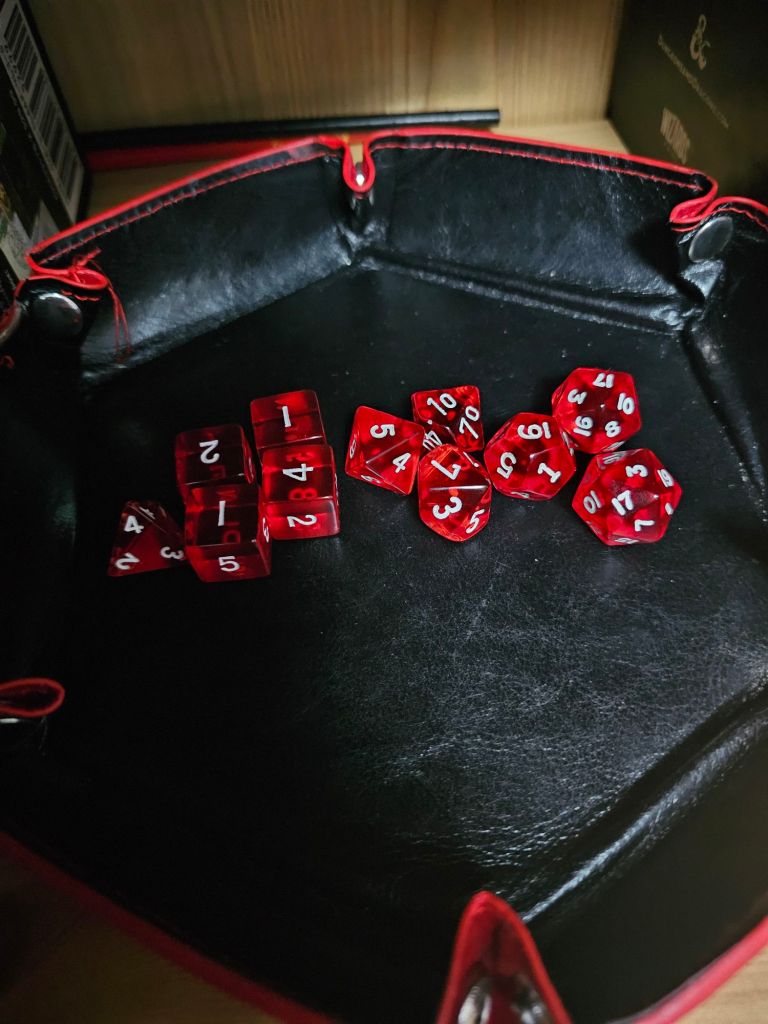
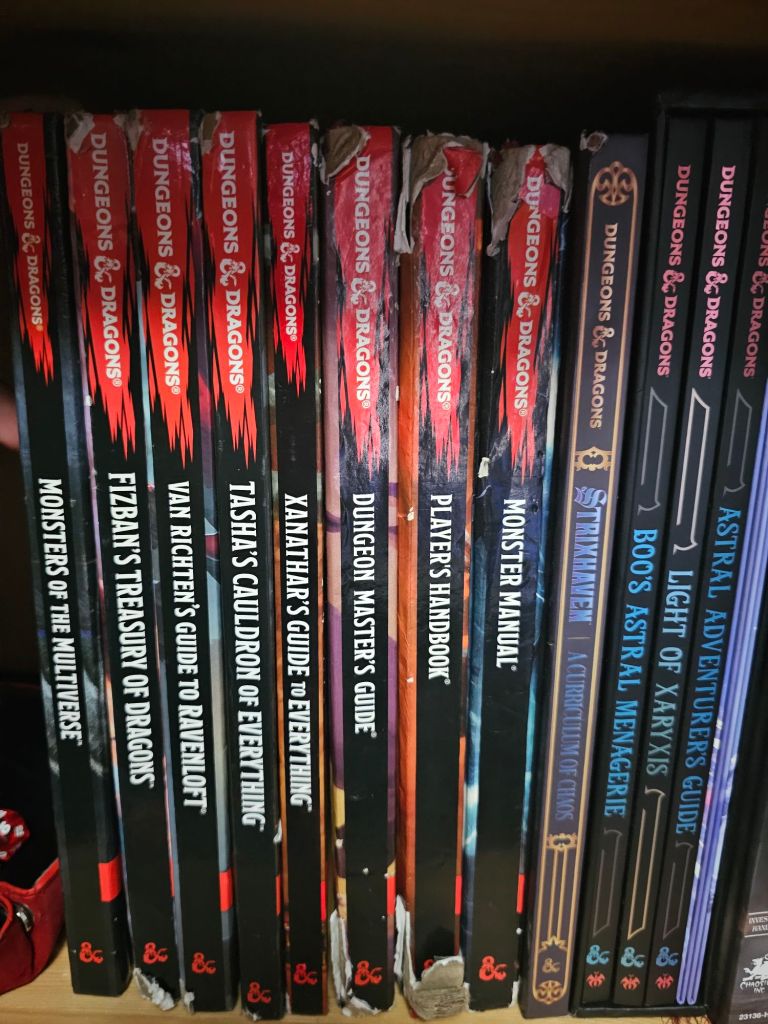
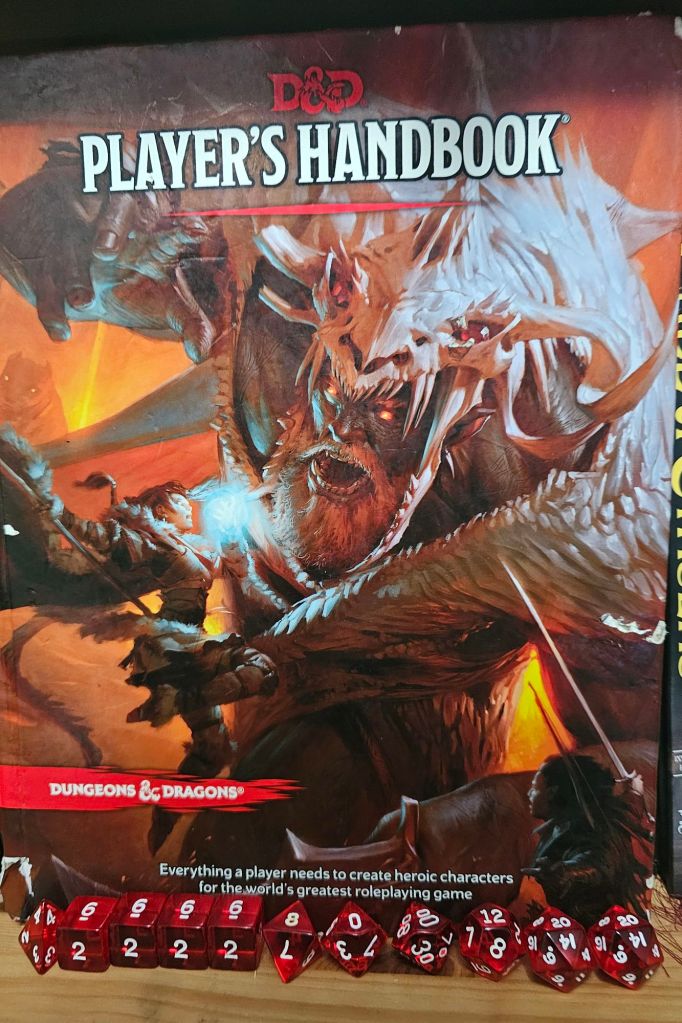
So here’s a picture of; myself, my therapy shelf, the book and dice I started Roll for Growth with, and the current stack of D&D books I own – plus a set of 3e stuff in the corner! Also is a shot of my current character sheet in the first game I actually get to play in!
I first came into RPGs as a teen, having been invited to play D&D 3.5e, – and did a ton of character creation work (it was cringe, I was a teenager), and unfortunately the week I was to join a game I got my first job. A year or so later I’d get offered to join a game of the newly released Pathfinder game, but then I got my second job – and my first full time career.
Since starting Roll for Growth in 2020 I’ve run over 25 therapeutic campaign groups, for age groups ranging from primary school students, high schoolers, to adults across the lifespan. LGBTQIA groups for teens – for adults, and the five Roll for Spoons groups being run for neurodivergent mental health workers. It’s been an amazing adventure – being able to bring people together and create the therapeutic, creative peer space for them.
So a huge thanks to everyone who’s supported this practice so far – and to every storyteller out there coming together with friends, or with strangers to soon be friends – thank you for being you!
Cosplay, a mashup of the words “costume” and “play”, involves dressing up as a character from a book, movie, or video game, and often taking on some role-play as that character. While many people view cosplay as a quirky hobby, there are several mental health and community benefits to this hobby, especially for young people.
While I am a huge advocate of doing things purely because they’re fun to do, make us happy or to satisfy our creative hunger, it’s cool to know that there’s additional benefits to the hobbies we enjoy!
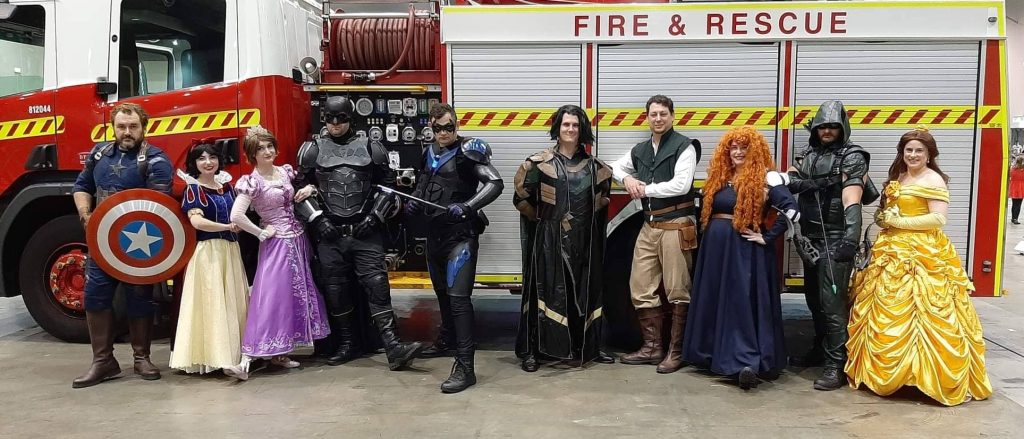
I’ve got a few examples of Perth’s awesome cosplay community below – full credits with link to social media can be found above the references in the bottom.
Perth’s Allied Costumers attend the Special Children’s Christmas Party in costume to entertain and take photos with disabled kids.
One of the main benefits of cosplay is that it allows young people (and the young at heart!) to express themselves creatively. Many young people struggle to find ways to express themselves and may feel like they don’t fit in with their peers. Cosplay gives them the opportunity to create a costume and become a character that resonates with them. This can help them feel more confident in their own skin and provide a sense of belonging within the cosplay community.
I can happily say that I joined the cosplay community in my teens and it really helped my feelings of connection and belonging – I found a group of people that shared my interests and had heaps of great ideas for making costumes and props.
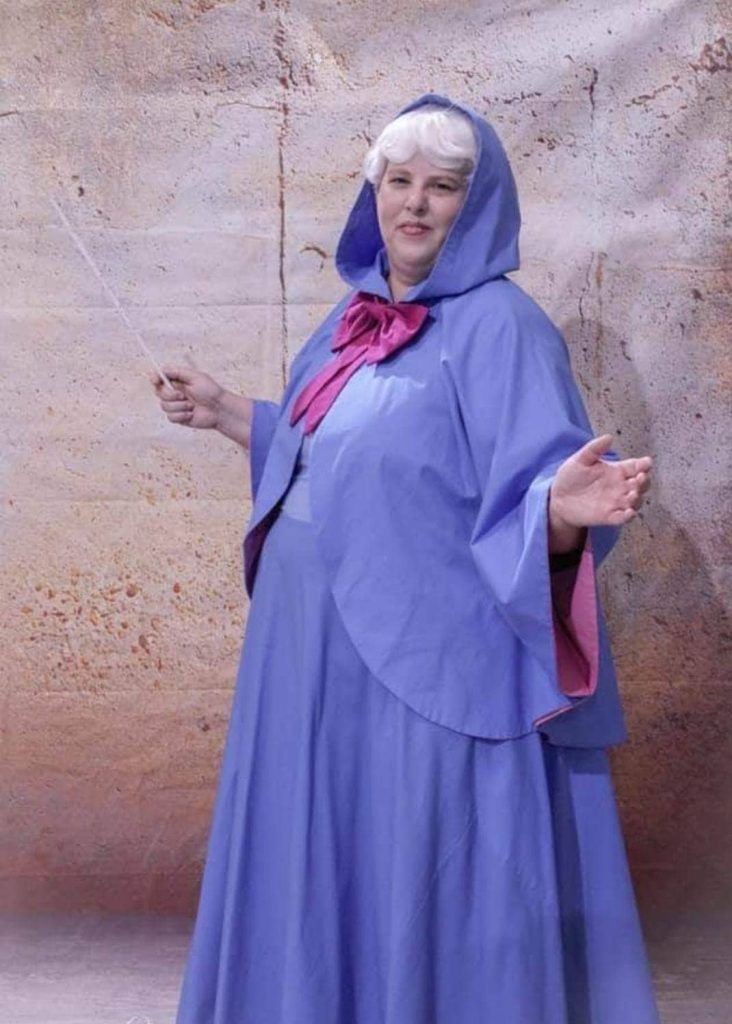
This Fairy Godmother cosplay (from Cinderella) was handsewn! Source: AusTex Costuming
In addition, cosplay can be a great way to help support people who experience anxiety and/or depression. Many young people who struggle with mental health issues may find it challenging to engage with others or try new things. The cosplay community provides resources, support and mentorship for new members trying to get started.
Cosplay provides a safe and accepting space where they can meet like-minded individuals and express themselves without fear of judgment. It also offers a sense of purpose and accomplishment as they work on creating their costumes and embodying their chosen character.
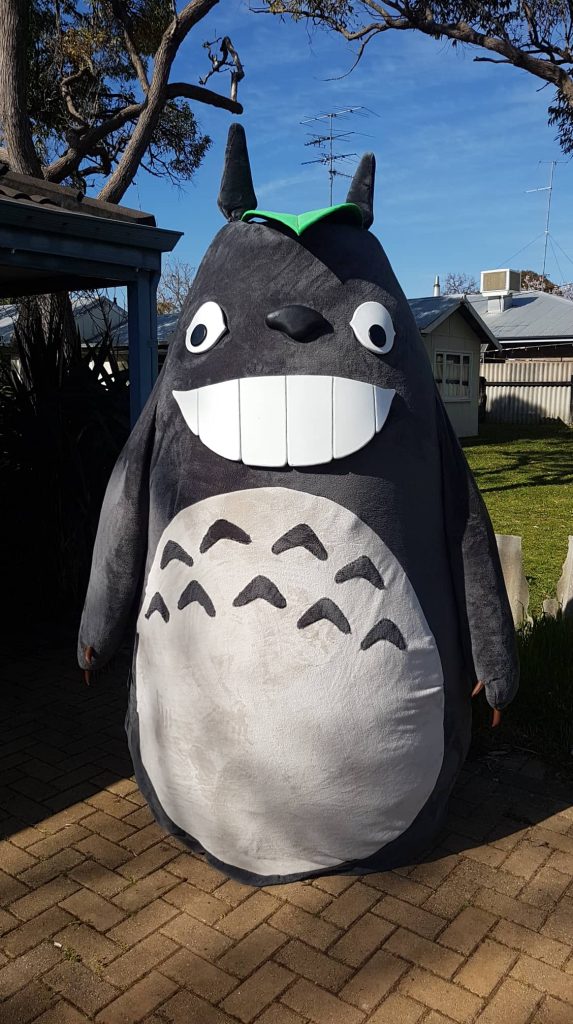
This is Totoro from the beloved My Neighbour Totoro anime was hand-built and has electronics that allow the wearer to see outside! Source: Terranous
Perth has a thriving cosplay community who run clubs and events across the Perth area! There are even groups such as the 501st Legion, who cosplay proudly film-accurate Imperial costumes, and the Rebel Legion, a counterpart group who cosplay as protagonists from the Star Wars franchise. These groups raise money for charity, and at Perth Oz Comic-Con 2023, they raised money for the Royal Australian Flying Doctor Service.
Perth’s Allied Costumers is another group of cosplayers who support charities and provide superhero cosplayers to events for children and disability groups.
This is Vanellope von Schweetz from Wreck it Ralph was handmade – including wig styling and the lollies in the hair! Source: koanicosplay
Cosplay also encourages problem-solving skills and creativity to create costumes from scratch, or to modify existing clothing to suit the costume in mind. Creating a costume requires research, planning, and execution, which can be a great way to build problem-solving skills. As young people work on their costumes, they may encounter challenges and setbacks that require them to think creatively to find solutions. Overcoming these challenges may help build their problem-solving skills and resilience.
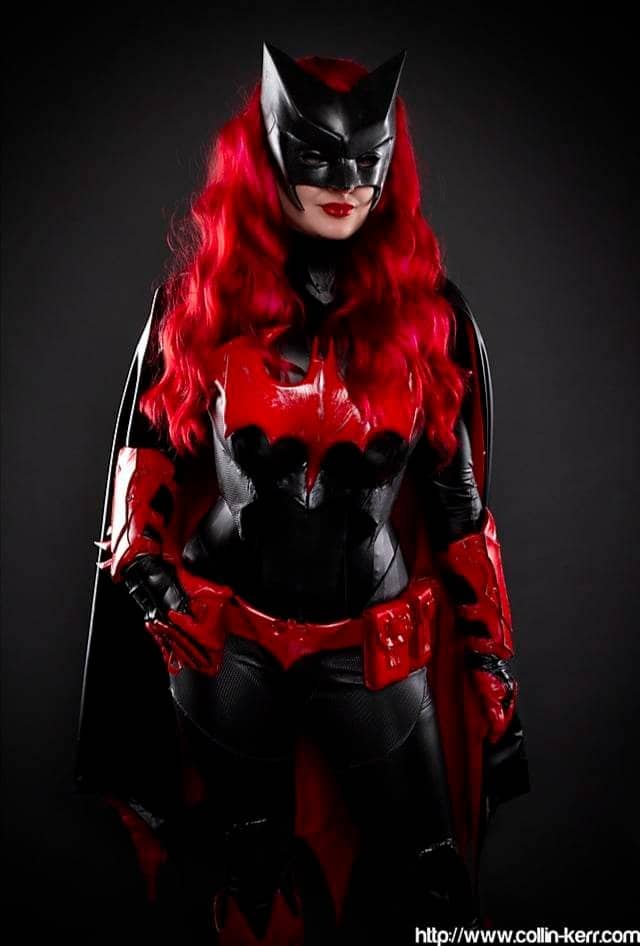
This Batwoman cosplay is from Carastrophic_Creates! Collin Kerr is the photographer for this piece. Plastic was molded by the crafter, and leather and carbon fibre were hand-sewn into this piece. The bodysuit was also sewn by the crafter when retail options weren’t good enough for the piece.
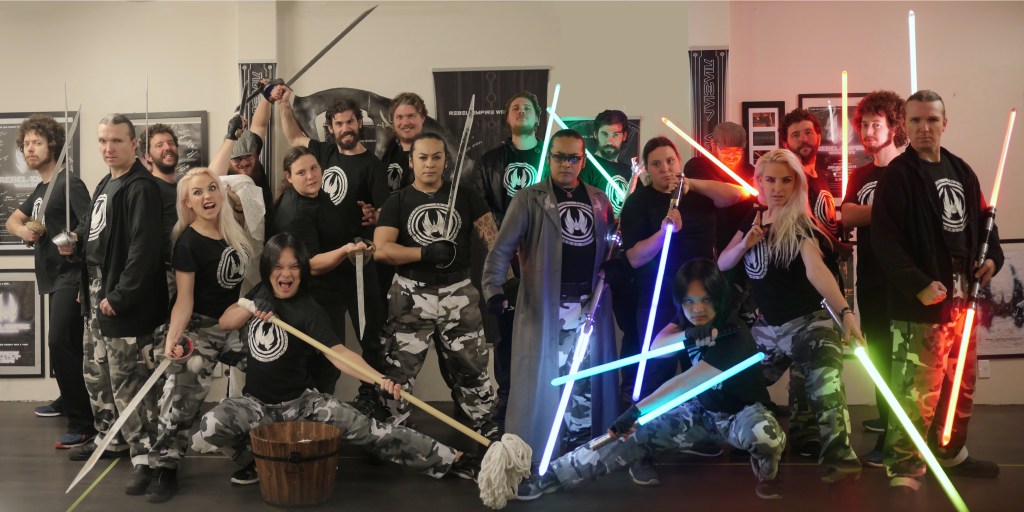
Cosplay can even reach out into other hobbies and communities! Groups such as Rebel Empire provide lightsaber choreography classes and allow members to create and portray lightsaber battles! The Live-Action Roleplay community also has much crossover with LARP and medieval sport-fighting, providing outlets for group sport and fitness!
This is Rebel Empire Workshops, who put on high quality lightsaber and swordplay choreography performances!
Furthermore, cosplay can provide a much-needed break from the stresses of everyday life. Many young people face pressures from school, family, and social expectations, which can be overwhelming. Cosplay offers an escape from these stresses and provides a space to recharge and rejuvenate while engaging in a creative hobby.
Lastly, cosplay can help young people build their social skills and make new friends from places that they normally may not. It brings people together from across social divides. Cosplay conventions and meetups offer opportunities to interact with others who share similar interests. This can be a great way to make new friends, and even network with others who may share similar career goals. The cosplay community is also generally accepting and welcoming, which can be a great way to build confidence and self-esteem.
Summing up, cosplay can have numerous mental health benefits for young people. It provides a creative outlet for self-expression, fosters problem-solving skills, offers a break from stress, and helps build social skills and friendships.
While cosplay may not be for everyone, it can be a valuable hobby for young people looking to improve their mental health and overall well-being, and gain some really awesome crafting skills!
Rebel Empire Workshops can be found on Facebook. Special thanks to Kaneda for sending me the group shot!
The 501st Legion’s Perth Chapter, the Desert Scorpion Garrison, can be found on Facebook and on their own website
The Rebel Legion’s Perth Chapter, Wraith Base can be found on Facebook and on their own website
Perth’s Allied Costumers can be found on Facebook and their own website. A huge thanks to them for their support in connecting me to cosplayers for this article!
References:
DeRosier, M. E., & Hutzler, C. (2019). The Psychology of Cosplay: A Systematic Review. Psychology of Popular Media Culture, 8(2), 144–159. https://doi.org/10.1037/ppm0000186
Guo, S., & Zhang, J. (2021). The Role of Cosplay in Promoting Positive Mental Health: A Thematic Analysis. Journal of Youth Studies, 24(5), 657–671. https://doi.org/10.1080/13676261.2020.1831712
Hall, C. M., & Cassidy, A. (2019). The Role of Cosplay in Social Connectedness and Belonging. Journal of Popular Culture, 52(2), 379–394. https://doi.org/10.1111/jpcu.12750
Kauffman, D. (2018). Cosplay as a Tool for Socializing and Self-Esteem: An Analysis of the Cosplay Community. Journal of Fandom Studies, 6(1), 53–69. https://doi.org/10.1386/jfs.6.1.53_1




 Counselling with Mike